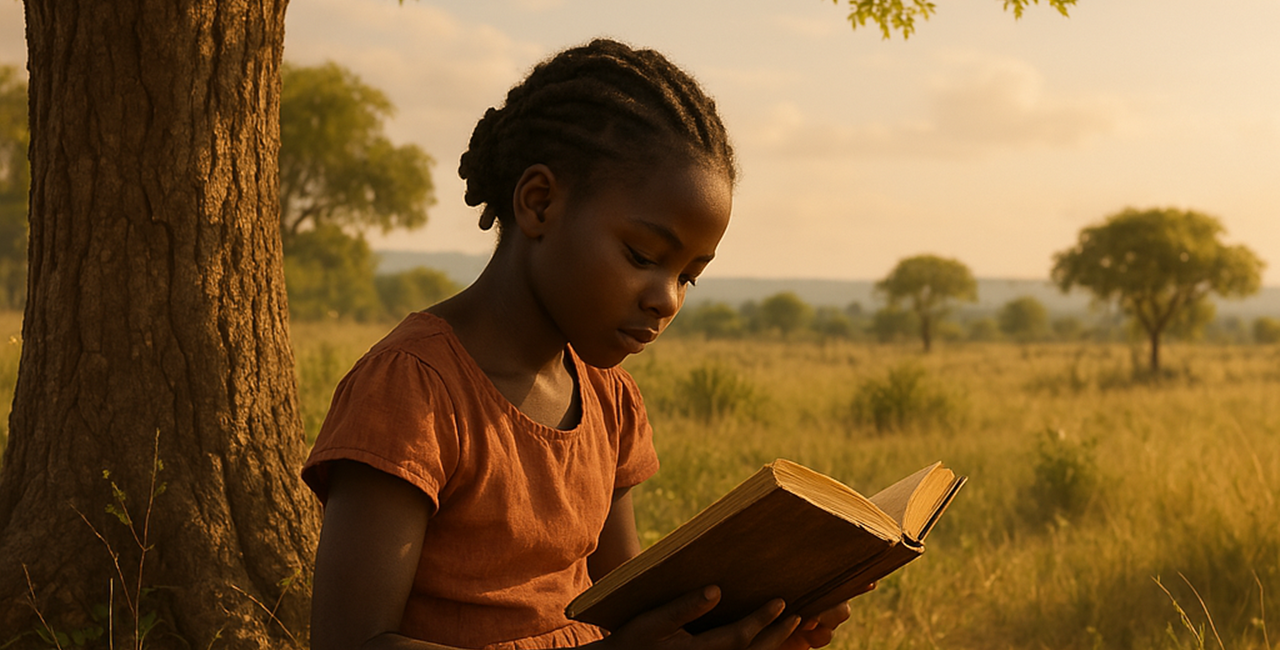
Imagine being nine years old, your life a constant shuffle between parched lands and crowded shelters. Drought steals your home, displacement steals your stability, and in the echoing halls of a new school, you're labeled 'lazy.' That was Nasieku's reality. Her dyslexia, an invisible barrier, went unnamed, leaving her feeling lost in a system that couldn't see her.
But what if that story could change? What if, even when the world around you crumbles, something precious and essential stays safe? That's the promise of the Wallet of Hope. It's not just another tech solution; it's a lifeline woven with digital threads, designed to rewrite survival into thriving for Kenya's most vulnerable children.
An Identity That Survives Fire
Think about it: when families flee disaster, everything is often lost – homes, belongings, even vital paper records. For a child with a learning disability, this loss can be devastating. Handwritten assessments, painstakingly done after months of waiting, vanish in the chaos. The Wallet of Hope offers a radical shift: a Self Sovereign Identity (SSI) wallet that gives children like Nasieku an unshakable digital identity. This wallet holds their critical disability data, safe from fire, floods, and displacement. When Nasieku’s family is forced to move again, her story, her needs, her support plan – it all moves with her. It doesn't vanish.
Arming the Helpers with Real Tools
A child's world is shaped by the adults around them. The Wallet of Hope recognizes this and empowers them with what they truly need. Nasieku’s teachers and parents gain access to tools that help them create and track her Independent Education Plans (IEPs) and find learning materials tailored to her needs. No more guessing, no more generic approaches. It's about understanding Nasieku's unique way of learning and providing the right support.
And for the healthcare system? The innovation streamlines the process of functional assessments. County hospitals, now equipped to use the World Health Organization's International Classification of Functioning and Disability form digitally, can issue these crucial reports in hours, not the agonizing months or even years families currently endure. This means earlier identification, earlier intervention, and a chance for children to get the support they need when it matters most.
Bringing Help to the Frontlines
Imagine a system where identification of learning disabilities starts not in overwhelmed, far-off centers, but right at the heart of the community. The Wallet of Hope forges partnerships that make County hospitals the frontline for standardized disability assessments, starting from birth. By embedding developmental checks into routine immunization visits for 0-5 year olds, potential delays are flagged early, opening the door for timely support. This isn't just about identifying a challenge; it's about opening a pathway to a better future, right from the start.
Innovation Born from Reality
This isn't innovation for the sake of buzzwords. It's innovation born from the brutal realities of Kenya's polycrisis – the overlapping challenges of drought, displacement, and an already strained system. The Wallet of Hope doesn't just tweak the existing system; it reimagines it.
Think about the Educational Assessment and Resource Centres (EARCs) – only 47 for the entire country, sometimes hundreds of kilometers apart, leading to agonizing delays. The innovation shifts the assessment process to County hospitals, which are far more accessible and already have multidisciplinary teams. This simple shift has the power to slash identification times from years to days.
And for teachers struggling with classrooms overflowing with 70 or more students? AI tools are being developed that can work offline and even via SMS, ensuring that technology supports inclusion without requiring expensive smartphones or reliable internet access. For the youngest learners, the innovation cleverly integrates developmental data into the immunization system – a system that consistently reaches even the most remote communities.
This is innovation built for a world where records burn, phones die, and yet, the hope for a child's future must not.
Reaching the Invisible Children
The Wallet of Hope focuses on Kenya’s most vulnerable learners: the children aged 0-12 who are often invisible to the system. These are the drought-displaced pastoralists, the children in urban slums, the young refugees. They face a triple exclusion – by poverty, by geography, and by a system that often overlooks their needs. Girls like Nasieku face even greater risks, with a higher chance of early marriage if their learning disabilities are not addressed.
When crisis hits, these children often vanish entirely from the system. Their educational records are lost, and overwhelmed teachers may resort to harmful labels instead of understanding. The Wallet of Hope aims to reach these invisible children at their roots, bringing identification to their communities, ensuring continuity in their learning even when they move, and restoring dignity to families who have often faced shame and isolation.
Play: The Language of Survival
For children, especially those facing immense challenges, play isn't a luxury – it's a fundamental way of learning and coping. The Wallet of Hope recognizes this by embedding play-based components into every IEP and learning material. Teachers and parents are supported in adapting these tools using elements from the child’s own world. So, for a Maasai child, learning vowel sounds might involve cattle-counting rhymes, while a rural learner might use stones to grasp mathematical concepts.
For the youngest children, the innovation leverages the power of play through developmental milestone checks conducted by community health volunteers during home visits and refined by hospital assessments. It's about making learning joyful, meaningful, active, and social – a chain connecting mothers, teachers, and community health workers in support of the child.
A Future Where No Child is Forgotten
The potential of the Wallet of Hope to improve lives is immense. In a system where children with learning disabilities are often excluded at multiple levels – by late identification, neglect, an unsuitable curriculum, and the chaos of crisis – this innovation offers a fundamental shift.
Imagine the impact of slashing assessment delays from 18 months to days. Imagine a child like Nasieku carrying her learning support in a digital wallet that survives every upheaval, ensuring she's never forgotten again. Imagine teachers equipped with AI tools to create personalized, play-based IEPs – something currently unimaginable in many Kenyan classrooms.
The promise isn't just in the data; it's in the laughter of children finally understood, in the security of knowing their information is safe, in the empowerment of teachers, and in health systems that finally see and recognize every child.
Building a More Equitable World
Nasieku's future, and the future of every child like her, hinges on breaking down the barriers of inequality. The Wallet of Hope ensures that IEPs become true lifelines, co-designed by parents and teachers, reflecting each child's unique realities and dreams. When Nasieku’s parents collaborate on her IEP, they see not just learning goals but also alerts for potential developmental delays and socio-economic vulnerabilities. The wallet empowers families to act proactively.
By involving both mothers and fathers in the IEP process, particularly in communities where a father's voice often carries more weight, the innovation fosters equal participation and challenges traditional power dynamics. For children like Moraa, whose speech delay could lead to late school enrollment, early identification through the wallet system opens doors to timely interventions.
Even in times of displacement, the wallet ensures that learning continues for both boys and girls. And for boys, the IEPs can incorporate gender-sensitive lessons, fostering inclusive classrooms where no child is left behind. This is inclusion by design, where every data point and every voice contributes to a future where every child has the chance to thrive.
Upholding Human Rights and Inclusion
For too long, children with learning disabilities in Kenya have faced a cruel paradox: sitting in classrooms but not truly learning, their struggles mislabeled and misunderstood. The Wallet of Hope tackles this head-on with radical identification and support.
Policy changes, driven by this innovation, will see county governments investing in functional assessment teams in local hospitals, making these crucial services accessible. For the youngest children, the digital wallet, issued at birth or during immunizations, enables community health volunteers to track developmental milestones, ensuring early identification and promoting equality. School-aged children benefit from empowered teachers who can identify struggles and refer them for timely assessments. And for displaced children like Nasieku, their IEPs become portable, surviving even the most challenging circumstances.
But the real revolution happens in communities. The Wallet of Hope aims to connect families with a range of support services, from mental health to assistive devices, ensuring that children can enroll in school and thrive. AI-powered tools empower teachers and parents to create culturally appropriate and play-based IEPs that integrate mental health support and combat isolation. Parents also gain control over privacy settings, protecting at-risk girls from stigma. This is about societal accountability – ensuring that no child is left behind, that the child hiding their dyslexia is seen, and that the displaced girl's learning journey continues unbroken. By embedding rights into the very fabric of the system, the Wallet of Hope turns invisibility into thriving.
Sustainability in a Changing Climate
In a world grappling with climate change, even innovative solutions must consider their environmental impact. While AI does consume energy, the profound impact of personalized education for marginalized children far outweighs this. The SSI wallet itself deliberately avoids energy-intensive blockchain systems, opting instead for ledgerless Decentralized Identifiers (DIDs) that provide secure identity protection without the environmental cost. This ensures that even in the face of climate-related disasters like droughts and floods, displaced children can carry their educational and health lifelines securely.
Furthermore, by making functional assessments and support services more accessible at the local level, the Wallet of Hope reduces the need for families to travel long distances, thereby lowering carbon emissions. This proximity also makes these vital services more affordable for vulnerable families, building resilience in the face of environmental and economic shocks.
Ultimately, the Wallet of Hope has no direct negative impact on the climate but acts as a crucial tool for supporting families and children, especially in times of crisis. It's about building a sustainable future where even in the face of environmental challenges, hope and opportunity remain accessible to all.
Nasieku's story is just one of many waiting to be rewritten. The Wallet of Hope isn't just a technological innovation; it's a testament to the power of human ingenuity to create a more just and equitable world, one digital wallet, one empowered child, at a time.
